Saturday, February 21, 2009

Silwan Profile 2: Family of 43

A large part of my internship at Rabbis for Human Rights has become creating home profiles for homes that are under demolition order. My second day of home profiling in Silwan took me to the home of the Abu-Naj family. This family's story is a tough one. They have 43 people living in their house. (This includes two brothers, a sister and all of their children and grandchildren). Their family moved into the house after the 1948 war, when they were forced to leave their former homes in West Jerusalem. Since then they have been paying rent to a man who recently died. Upon his death, a Jewish* settler family claimed the house as being theirs (from before the 1948 conflict I suppose). They refuse to take rent payments or offers to buy the house from the Palestinian family and demand that they leave the house. To further complicate matters, because of their large and growing family, the Abu-Naj's have added on several rooms to the original structure of the house. After the settler family made a claim on the house, the government issued a demolition order on the parts of the house that were not part of the original structure, saying that it was built without a building permit (Arabs are essentially NEVER given building permits by the government to build in Jerusalem, so almost all houses are built without permits - in fact, pretty much the entire neighborhood of Silwan is under demolition order because of this). And to even FURTHER complicate matters, the settler family that is claiming the house says that the house itself has some sort of religious significance and therefore has even more reason to not be a home to this family. Eek.

Here is the head of the household with two of his grandchildren. He painted the room himself and says that he likes to go there to pray and be alone (with 43 people in the house this is a rare space).

This is Fakhri, a community leader and my contact/translator in Silwan. He picks me and the other volunteers up at the entrance of the neighborhood and walks with us to the homes that we are profiling. (Thank goodness or I would probably STILL be wandering around lost). Unfortunately, his home is also under demolition order. It is in his home that I participated in my first interview and profile.
Each interview cannot start without 2 or 3 wonderful cups of mint tea (with lots of sugar) and cannot continue without a VERY THICK cup of coffee (complete with a pile of grounds at the bottom of each cup). I have never, ever liked coffee, but I have learned to breathe deeply and get enough of it down (after pouring in about 4 spoonfuls of sugar) to be polite. I learned that drinking it quickly is a big mistake as then I am just given another cup. Slow sipping is key. Needless to say, each interview ends with me on a sugar and caffiene high.

This interview was hard, as I could tell right away that they would have a very tough case and if everything continues at the status quo, will lose their house. It is hard to sit and get to know these people and experience their hospitality and see their love for their home and family and realize that in a week or less, their home may be rubble and they will either be forced to crowd in with neighbors or be on the street. That said, at the end of this interview, I got a special treat because two of the grandchildren who live in the home peeked in the door to visit. They are beautiful and animated children who were especially excited about seeing their images on my camera. I look at these pictures and hope.. I don't even know for what exactly. For peace? For them to learn to forgive and coexist despite what has happened in their pasts and present? For them to value and to be valued as humans instead of by ethnicity, religion or race? For them to be blessed with extra heapings of resilience and optimism?


*Note: This does not mean that all Jews in Jerusalem do the things or believe in the things that this particular settler family is doing. In fact, the vast, vast majority would not. Even further, there are many Jews in Jerusalem (including my organization Rabbis for Human Rights and most of my Jewish friends and people I interact with daily) who outright condemn that this is happening. This has nothing to do with Jews vs. non-Jews, or even Israelis vs. non-Israelis. It is an extremist attitude that unfortunately a few powerful people and families have adopted, and even more unfortunately, that the government has not stopped. One of the most shocking things that I have learned is that many (if not most) people (even in Jerusalem) do not know that this is happening, or if they do know, they do not know the extent of it or its affect on the individuals, families and communities.

Thursday, February 19, 2009

Heading to Jordan!

Lots happening: two of my home demolition cases have gone to court this week, taught the Bedouin teachers on Tuesday, I was detained briefly at a border with a friend on Sunday, stuck for a few minutes in the cavernous checkpoint at Bethlehem on Tuesday, gave a presentation to the Rotary club of Jerusalem, taught rabbis about blogs :), got to see the church of the Nativity in Bethlehem, went to the Galilee and Nazareth last weekend..... so many stories to tell... but it will have to wait, because I am packing up to spend the weekend in Petra, Jordan.

I am loving my time here so much, and learning more than I thought possible.


PS - On the alert: government sent out a notice that homes in Silwan will be demolished in the next 48 hours (please no), my heart aches.

Sunday, February 15, 2009

this pretty much sums it up:

Without stirring abroad,
One can know the whole world;
Without looking out of the window
One can see the way of heaven.
The further one goes
The less one knows.

-Lao Tzu

Saturday, February 14, 2009

Valentines Day in Israel

I have been asked a few times if they celebrate Valentine's Day in Israel. Hopefully these pictures, taken in Nazareth, will answer the question.

Wednesday, February 11, 2009

And the winner is....................

ummmm... not sure.

Livni squeaked out a narrow win but.. now there's all this talk about pulling together coalition government, and how she may not be able to.... the verdict is still out.

"An inconclusive election sent Israel into political limbo on Wednesday with both Tzipi Livni and Benjamin Netanyahu claiming victory and scrambling to form rival coalitions.

With 99 percent of the votes counted Wednesday morning, Livni's centrist Kadima was in first place with 28 of the Knesset's 120 seats, while Netanyahu's right-wing Likud followed closely behind with 27 seats.

Kadima's narrow lead means it is still uncertain whether Livni will be able to muster the 61-seat coalition needed to form a government. Netanyahu, in fact, has a better chance of forging a coalition because of gains by right-wing parties, his natural allies."
Check out the full article here.

Tuesday, February 10, 2009

Election Day in Israel

Disclaimer: below are just my impressions of the elections today. I in NO way am an expert on Israeli politics (I could barely be called an amateur observer) and I honestly haven't even been following all that closely in the last months. Any ideas below are simply things I have picked up informally by reading news headlines, or chatting with my friends, roommates, and people on the street. I am writing this mainly to educate myself!

Today is election day for the Israeli Knesset (Knesset is the parliament - kind of like congress, only with one branch instead of two like in the USA)!

What that means in the short term:
  • My office is closed (as are almost all businesses - its like a holiday, which I think is brilliant so that everyone can go and vote)
  • Public transportation is free (wow, huh? - though I think you have to prove you are going to vote. My roommates all had to travel home (outside of Jerusalem) so they took the free transport this morning!)
What this means in the long term:
  • The leader of whichever party wins the most seats in the Parliamentary election will become the new Prime Minister.
  • A new party *may* win a majority in Parliament, meaning a shift in the general direction of the countries policies and legislation.
Major issues that seem to be affecting the elections:
  • The Gaza War - hello. This was (and is) a HUGE deal - when we first arrived in the country, many people told me they thought the elections would be postponed or cancelled due to the conflict. Also, because of the conflict there has been a breakdown in cooperation efforts been Jewish and Arab groups (this is also affecting our work with NGOs because of fear of backlash by extremist groups if people are seen to be 'cooperating' with the other side). At one point, 2 of the Arab parties were disqualified from running for the Knesset (for complicated legal reasons), but they were recently re-allowed to run. Intersting video on this here.
  • There seems to be a swing to the right in Israeli politics (so I hear) - in large part, probably due to the above. This has caused many to believe that the rightist and even extreme rightist parties are going to make huge gains in the elections. Several people I have talked to say this is very scary for the peace process.
  • A Palestinian State and the Peace Process.. per usual
  • And of course, lots and lots of domestic issues. (check out the link! It is a great super easy to read and short background on the major issues)
The main contenders:
  • Tzipi Livni (Party = Kadima) - She is in the running, her party seemed to be behind before, but they are making a comeback. She paints herself as the 'centrist' or 'moderate'. She is currently the acting PM.
  • Ehud Barak (Party = Labor) - Remember him? You, know, Camp David with Bill and Yasser? He was PM from 1999-2001. He is currently the Defense Minister. Most people I have talked to don't think that he will win. His biggest thing seems to be staying the Defense Minister, meaning that his party needs to win a certain number of seats.
  • Benyamin Netanyahu (Party = Liqud) - he is currnetly leader of the opposition, and is known as 'Bibi'. His party is definitely hard on the right. I'm not going to lie, he seems kind of scary to me. According to the BBC he is "one of the most right-wing and controversial leaders in Israel's history" . He was PM right before Ariel Sharon. Up until the last day or two, everyone seemed to think he was DEFINITELY going to win - now, it seems a bit more up in the air.
  • Avigdor Lieberman - (Party = Yisrael Beytenu) - VERY far right - I don't think he will win, but I add him on here because his party is expected to make big gains and they have been getting a lot of press. He is best known for his hard stance on Arabs - he proposed a plan where every single Arab would have to sign a pledge to Israel as a Jewish and Democratic State, and that every large Arab neighborhood would be cut out of Israel. Uh, VERY scary to me.
  • There are a bunch of other smaller parties, many moderate, left, even Jewish/Arab alliances - but they are all small and so are not likely to win a majority. (it is interesting to me, because most of the people I have talked to said that they are voting for one of these smaller parties - granted, I talk to a lot of human rights people. BUT, even some of my roommates, who are definitely NOT HR people, said they are voting for the smaller parties)
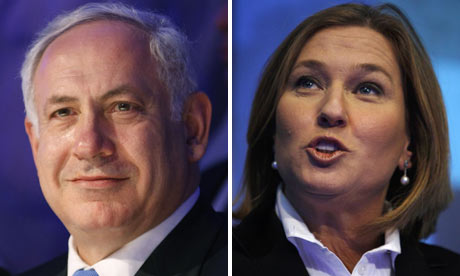
Who will win? I have no idea. Some people I talk to say it is a 'shoe in' for Netanyahu. Others say it is way too close to call. Of course, several of the parties announced this morning that they are guaranteed to win. Headlines this morning seem to suggest that Kadima (Livni) is closing the gap with Liqud (Netanyahu) - it could be an exciting night! We will know soon. Netanyahu and Livni's pictures are here for your enjoyment. :)
[source]

Interesting side fact - Israel has both a President and a Prime Minister.
This explains the differences well:
"Israel's President is a largely ceremonial job, with the bulk of power lying in the hands of the Prime Minister. The President is the official head of state who is elected by the Knesset whose roles include: signing laws, chooses the member of Knesset to form the government, confirms diplomats, signs Knesset approved treaties, appoints judges and the governor of the Bank of Israel (as well as other bureaucrats). The Prime Minister, who is elected as a Member of Knesset through general elections is responsible for the official running of the country, a role similar to that of other heads of State in the West." [taken from Israel Votes]

Some resources if you want more info:
Israel Votes - This is a great site to get the basics, I found it very easy to understand
The Guardian's analysis - lots of great articles here (and very user-friendly)
Haaretz - a left-leaning Jerusalem newspaper
The Jerusalem Post - a more right-leaning Jerusalem newspaper

Monday, February 9, 2009

Transport Frustrations

YESTERDAY:
(wave down taxi)
me: Silwan for 20 shekels?
cab driver: no
me: 25?
cab driver: no - its Arab neighborhood.
me: ugh, fine.

(wave down next taxi)

me: Silwan for 20 shekels?
cab driver 2: no, its Arab
me: fine.

(wave down next taxi)
me: Silwan for 20 shekels?
cab driver 3: (drives off)

repeat a few more times... 7th or 8th cab driver is Arab, so we are in luck, get a ride to Silwan.....

later that day in Silwan:

(wave down taxi)
me: Mount Scopus for 20 shekels?
cab driver 4: no, its Jewish.

you have got to be kidding.


TODAY:

I have to catch an 'Arab' bus to Azarya, the Bedouin village where I work with the teachers (yes, there are "arab" buses and "main/public" buses- they go to different neighborhoods)
I am standing at a 'public' bus stop near my university waiting for Arab bus #36 to come along.

THREE 36's pass me without stopping, despite frantic waving gestures/jumping out into the road.

Why? Why are they not stopping??? I look around - what could it be? I have no idea. The only thing I can think of is that there are a bunch of soldiers around me... but they are all relaxed and just sitting waiting for a bus- I don't know. Maybe a there is a rule against them stopping there? They seem to stop EVERYWHERE else - I don't get it.

So after waiting for almost an hour, I haul myself and my half broken leg down a hill into Isawiyya - an Arab village right by where I live - and of course, a #36 bus stops immediately.

Seriously, folks - what gives? There has to be some easier way of transferring between the Jewish and Arab worlds here.

A side note - on the #36 on the way home, I was the only person on the bus for a while. For whatever reason, the people on bus #36 are SO nice to me. The other day, they drove out of the way to drop me where I needed to go (at the insistance of the people sitting around me). Today, the bus driver bought me a bag of salted soy beans (or something - maybe chickpeas?) from a street vendor - they were delicious, and I was touched.

Sunday, February 8, 2009

Silwan

This is Silwan, and Arab neighborhood in East Jerusalem (PS - totally check out the link, it has a very interesting history). Today, I went with two other volunteers to interview a family whose home is under demolition order by the government.

I"ll hopefully have the patience to write out a bit of the issues with home demolitions in the future, because it is incredibly important and incredibly complicated - but for now, check out the link above if you are interested.

Outside the home of the family that we interviewed - this house has a demolition order against it.


Conducting interviews. Mainly, we ask questions just to try to understand their side of the story - what were they told by the authorities, what is the story behind the home and property, do they have legal representation, what will they do if it is demolished, how many people live there, etc.


What we want to not happen: The remains of a home that was demolished a couple of months ago. In this case, there was not very much time to get everything out, so there is all sorts of stuff in the rubble - shoes, furniture, etc.

Welcome to the West Bank - Olive Tree Planting

On Friday, I went with RHR to plant Olive Trees in the West Bank. Why olive trees? Three reasons:
  1. Olive Trees are the symbol of peace
  2. It is a good productive way to bring Israelis and Palestinians together
  3. The picture below:
Along the horizon, is a Jewish settlement. Technically, these settlements in the West Bank are illegal, however - it is complicated. (As is EVERYTHING here)... and... well, they are there. And they are not supposed to expand, but... well, there are plans to expand this one. Is it illegal? Rabbis say yes. Is it unethical? The Rabbis say yes. But - the real issue - is that the land that is being marked for expansion is land that Palestinian families believe is their land.

So........ without further getting into the complicated political mess - let's talk about the proposed solution: olive trees.

Olive trees take about 10 years to mature to the point that they produce olives. Olives are the main source of income for Palestinians in this part of the West Bank, so the trees are prized enormously. Also, planting them means that the land is claimed - and in some way that I don't understand - it keeps people from being able to just take their land. Check this picture out: this is a Mennonite Christian and a Muslim planting a tree together.

Here I am super excited to stick that thing in the ground.

This is when I decided not to be a farmer, and began to wonder how in the world there was ever civilization on this land:
Here is the leader of a local mosque, beside Rabbi Yehiel - they worked together to create the event. They are both amazingly inspiring.
My first olive tree:


However - it got a bit more complicated. Apparently, soldiers had been ordered to plant some other kind of tree in the same area that we were planting - and apparently this kind of tree sucks the water and would kill the olive trees - so they pulled them out.
And sure enough - soon some soldiers were sent to check up on us. When they walked by, the mosque leader said to them 'someday i hope you put down your guns and work for peace with us' - and one replied 'i do not hope that - i am here only for the security of my country.' A feisty elderly Jewish woman next to me yelled after him 'in time you will understand!' The entire interaction was amazing to watch - there were all spectrums, all sorts of understandings of the situations - all sorts of people doing what they believed was right...

The almond trees began to bloom the last few days. It is beautiful.

Hopefully, in 10 years... our baby trees will grow into this:

Blessed are the Peace Makers - Ibrahim

I had to leave the Bedouin school quickly, because Wednesday afternoon I had an appointment to meet Ibrahim, a Sufi Muslim living near the Mount of Olives. He is one of our core contacts in that area. Just this week a couple of demolitions have taken place, and Ibrahim is our way of finding and talking to the families affected.

Before we could talk business though, we had to eat. Ibrahim prepared us a literal feast - food covered every inch of the table - and told us all sorts of stories about his life and family. Ibrahim is unique - he is a peace maker who believes in working with Jews, Christians, whomever - to achieve peace in his land. His stories were passionate and inspiring. He truly believes that peace is possible, and has dedicated his life to it. He leaves his door open to anyone - and his home has become a neutral place for people to meet and come together from all sides of the factions.

He is truly a preacher of love and peace - he told stories of speaking across the world the message the Palestians and Jews are brothers - he told us about dancing at bar mitzvahs and Christian weddings - and about how much his identity as an Arab means to him. He believes in the power of relationships and grassroots efforts to build peace - he says that the politicians and world leaders need to stay out of it and quit funding the militaries on both sides.

Sitting in his home, it is not hard to believe him and the entire situation, for once, seemed infinitely more simple and hopeful. I pray for more like him and that his influence can multiply.

Me and Rabbi Yehiel - stuffing ourselves with Ibrahim's amazing lunch.

Our group after lunch. From left - Moshi, who is an exchange student from Ukraine/USA who is volunteering at RHR , Monika, an exchange student from Poland volunteering at RHR, me, a Christian guy who was staying with Ibrahim, Ibrahim, a girl staying at his house from Germany, and Ibrahim's grandson.


This is a picture of Ibrahim's ID document. Like most Palestinians in Jerusalem, Ibrahim was not given Israeli citizenship. This means that he is not a citizen of any nation (Palestine is still considered 'Occupied Territories' by Israel) and does not have a passport. He laughed uproariously showing me his ID document as it says he is Jordanian- which he does not identify with at all. As he showed me, he pointed at the next room, saying "I was born behind that wall - do you think that is Jordan?!" [Note: Jordan annexed the West Bank and East Jerusalem after the 1948 war. So according to international law, between 1948 and 1967, E. Jerusalem was part of Jordan as an annexed territory, but many Palestinians that I have talked to do not recognize this as they have a separate national identity and did/do not want to be part of Jordan]

My precious Bedouin babies

Last Wednesday I went with a human rights worker, Nitsa, out to a Bedouin school. Nitsa teaches Hebrew at the school each Wednesday and took me with her to make some contacts and to see if I could set up some sort of conversation group with the teachers.

I had the most wonderful morning - I spent most of my time talking to one of the teachers, who is 22. She was one of the only people there who could speak English easily, and she was SO excited to talk with me. It turns out that she visited the US a couple of years ago on a language -learning scholarship through BYU - go figure! Her impressions of Utah, Mormons, and the USA in general were hilarious and insitful.

After about an hour of visiting, she asked me to come with her to teach her English class. It was a complete disaster of a class - the kids were all over the place.. but I loved every minute.

I will be going back every Monday to have a conversation group with the teachers - they want to practice English and bounce teaching ideas off of me (I was introduced as an expert teacher - ha!). It is something I am looking forward to greatly.

Pictures from a weekend break in Tel Aviv

Some random pictures from the Christian Quarter


Church of the Holy Sepulcher

Last week I finally had the opportunity to get back to the Old City and visit the Christian quarter. The highlight was the Church of the Holy Sepulcher (Sep-pull-ker). The church marks
the place where it is believed that Jesus was
crucified, cleaned, buried in a tomb, and rose from the dead.


I was amazed by the opulence of the place - it was the most ornate place I have perhaps ever been. The picture to the left is of the place where Jesus is said to have hung from the cross - (you have to climb stairs to get up the hill of Golgotha and to the height of where he was hung). Just look at the ornateness!! I know that to so many, this is a way of worship, but to me, it completely overwhelmed the space and - overwhelmed me.

It was so completely surreal to stand in the places from which all of Christianity is based - and look around at all of the different versions of Christians... it was actually incredibly overwhelming to me. I wasn't entirely sure what to think or how to feel about it. On almost every wall hundreds of thousands of crosses had been carved in over the last several hundred years. It was utterly amazing. The picture below of the people sprawled on the ground is of the rock where it is believed that Jesus was cleaned when he was taken off of the cross. Many people would kneel near it, and rub all sorts of things over it in order to make them holy. I saw a lady take literally everything out of her purse, including her cell phone, ipod, kleenex, a pair of earrings and a nail file, and rub them all over the rock.


Wow - huh? To go to the place where my religion originated - that's big, right? HUGE, right? And yet - it was more than anything to me a moment where I realized that our religion, our spirituality, our theology - is something that is interpretable a million different ways, across a million different cultures and 6 billion different individuals. Just looking at even the way that this space had been utilized over the years was mind blowing - there were catholic quarters of building, and orthodox, and coptic, and fransiscan and armenian.... monks from allllll sorts of backgrounds - women completely covered, women in little tiny skirts with bellies showing - truly, it is amazing to me the number of ways that Christianity (and any religion for that matter) has been interpreted.

I have now had the chance to stand in the holiest site for Christians, the holiest place for Jews, and the most sacred of places for Hindus - and ... I think I love religion less for all of it.

BUT I surely love people more and am continually amazed at humanity's continual search for divinity. And, at the very end of the day, still....there is no doubt that...


:)

Our professors from this quarter


Thursday, February 5, 2009

looking at a different side of an analogy...

This was written by Randall Kuhn, one of the professors from my graduate school in Denver:

KUHN: When Israel expelled Palestinians: What if it was San Diego and Tijuana instead?

Please note: there are all sorts of sides to this story, this is just one that I found interesting.

Tuesday, February 3, 2009

On Looking And (Not) Being Jewish

actual conversation from the bus yesterday:

woman: brrrrrrrr tov brrrr

me: oh, i'm sorry, I don't speak Hebrew

woman: where are you from?

me: the United States

woman: you are here on Birthright?

me: no, I am here for an internship

woman: you have a very Jewish face. Jewish eyes.

me: Yes, I am told this a lot.

woman: Very Jewish nose. You are Jewish?

me: No, no.

woman: oh.

(pause)

woman: where do you work then?

me: Rabbis for Human Rights

woman: So you are Jewish?

me: No.

woman: But VERY Jewish face. I think maybe you are Jewish and you just don't know. Everyone in United States is mixed up.

me: Yes, I suppose it is possible.

woman: you have very pretty Jewish hair.

me: ...thank you.


take variations of this conversation and replay 3- 4 times a day.
this is my reality.

Monday, February 2, 2009

I used to be a teacher.

This just made me cry.
I miss it so much.
Go watch this and you'll see why.

YES PREP Recruitment Video

by Craig Brandenburg

Sunday, February 1, 2009

RHR Day 1: Welcome to Balagon.

Balagon is a Hebrew word meaning 'chaos.'
And after today, it is a word I will never forget.

Today was my first day working with Rabbis for Human Rights.

I was a little bit anxious this morning, mainly about being able to find the place.
However, thanks to some advice (thanks Talia!) and a lot of asking the bus driver of bus #30 where to get off (don't worry! he kept telling me) I did manage to find the office - - it isn't exactly in the classiest section of town (my instructions were something like - get off at the industrial zone, walk through the mall across the parking lot, through the wire fence, look for a baguette shop... etc.) - but nevertheless, after a few fruitful conversations with security guards, I found it.

I felt a bit bad that I was a few minutes late - but that didn't turn out to be a problem because my supervisor actually forgot about me and hadn't come in to work that morning. I actually was thankful for it though, because the wonderful receptionist called him to come in, and it gave me a few minutes to orient myself and read some of the brochures and such about the organization (irgun).

Those were the only slow minutes of the day.

My supervisor, Rabbi Yehiel, came blowing in a few moments later. He is possibly one of the kindest, most jolly men I have ever met in my life. That's him on the left (I stole the photo from BBC News online). The minute we came in he started pumping me full of information about the organization, what they do, the problems they face, etc., and trying to figure out what I wanted out of working there. But before I could say a word, he was like - well, we have a meeting to get to.... and off we went.

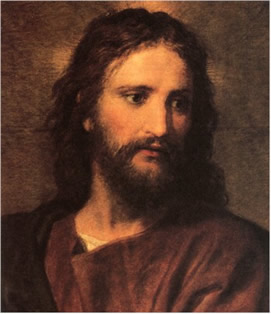
As we were getting ready to run out the door, we were told to wait by the executive director, Rabbi Arik Ascherman. Arik is a tall, striking man, with a full beard and curly hair topped by his kippah. He kind of looks like all of our pictures of Jesus. (Is that offensive? I hope not. I mean it in truly the best way possible.)
We all jumped into Arik's car, and the two men chattered away about the topic of our meeting and fielded phone calls right and left.. and in between asked me about my background.

The meeting topic, I soon discovered, was about a Palestinian woman whose home had been seized by the government.

I'm still not clear on all of the details, but the rough idea is that the government came into her house in the night and told her and her family to get out, that the house belonged to Jewish settlers. I don't know how long she had lived there, but I think it had been a long time. There was an especially tragic twist to the story because the trauma of being evicted caused her husband to have a heart attack and he passed away. She is now living in a tent provided by the Red Cross. However, government officials have tried to take her tent about 3 or 4 times, and her situation is precarious. RHR is involved to make sure that all of her rights are being protected and that she has good legal representation, etc.

The meeting - was in her tent.

As we drove up, I kept thinking - wow, I am seriously here?

It is a white plastic structure held up by metal bars. Carpet (I assume from her home) had been brought in to lay over the gravel floor, and blankets had been hung to separate a sleeping area from a living area. There was a iron barrel in the middle of the living area with a small fire burning in it to keep us all warm (it was cold and rainy today). Plastic chairs and a couple of old sofas had been brought in to accommodate all of the visitors. There were about 15 or 20 people all crammed in the tent - representatives from various Human Rights and legal NGOs, a few other families who were also in danger of their homes being taken, and so on. After greetings, the meeting commensed.. in a mixture of Arabic, Hebrew and English, and I was handed a small plastic cup of VERY strong coffee. The woman spoke first, giving an emotional monologue about her situation (of course, I understood none of the words, but I certainly understood the point) - and then Arik began trying to set up an agenda for what they were going to talk about.

I was literally in awe at this point, I couldn't believe I was in Jerusalem, sitting in a Palestinian woman's tent, discussing what to do about the dispossession of her home.

Oh - but that was SO FAR from the end...

Within literally less than 10 minutes, several people's phones began to ring. At first, I didn't think anything of it - but as soon as someone's phone would ring, they would jump up and urgently walk out of the tent. After a couple of minutes of this, not many people were left, and everyone was mumbling (of course in languages I don't understand - this is why I SWORE to myself I would learn the language before I went to a country... oops). I kept catching words like.. school... children... injured.

Soon enough, I got the whole story and we too were storming out of the tent.

While we were meeting, and UN-run Palestian girl's school had collapsed, injuring 7 girls. The rumor was that the collapse had been caused by illegal excavation by a right-wing Jewish group under the school.

We left the woman and her tent and jumped back into the car and drove madly toward the school. When we got near the Old City, traffic was already backed up nearly a kilometer with ambulences, fire trucks, UN vehicles, and journalists. Arik had Yehiel, myself and the other girl with us jump out of the car and run towards the school to try and get there more quickly.

So we did - well, mine was more of a skip/limp/run... but it worked.

When we got there, it was chaos, people crowding, women crying, children still streaming out of the school, ambulences carrying off the injured, journalists fighting to get interviews, videos and pictures, UN personell running everywhere, and the police vainly trying to control the situation with red plastic tape. Palestinian men and women were pushing towards the scene, many of the them VERY upset and yelling at the UN officials and such - 'This is the Jews fault!'

From the outside, it was hard to tell what had happened - all we could see was a lot of people crowding and the sign on the school building.

There wasn't a lot we could do, since there were so many people it was almost impossible to get inside and see what had gone down. Soon the mayor was on the scene making a statement.
My picture isn't very good, but he is the man that the camera is point at on the left.

There were all sorts of unhappy people including a very emotional woman who was yelling at all of the video cameras around about the wickedness of the excavationers in excavating directly under so many of their homes and schools. She is the one below in the white scarf with her hand in the air. I was utterly amazed at how quickly the whole situation had become completely politically charged. Government officials right and left were making hard and fast statements about how it was NOT caused by excavations, while Palestinians all over were full on blaming the government and the Jewish population in general for causing all of it.

After about half an hour, Arik finally made it to us, and he was somehow able to get us all inside the school compound. The scene inside was even more chaotic than outside - there were SO many journalists all trying to get photographs of the scene, to show one way or the other what had happened. You can see in the picture below all of them vying for a shot of the classroom that had collapsed. By this point, we had learned the the floor of the classroom had just completely caved in, causing all of the havoc.

I stood in the school yard for a long time, watching the scene while Yehiel and Arik tried to get an idea of what had happened. The interaction between the UN officials and the Palestinians was incredibly interesting and charged.

After talking to a LOT of people, Yehiel directed us out of the scene and around the back of the compound. At this point, it was unclear what had caused the collapse, and there was a good chance that it could have been caused by simply bad architecture or natural geologic shifts. We went around the back of he compound, though, to check to see if there had been any excavating going on.
What we saw was this ---------------------------->
A freshly cemented gaping hole in the side of the school (it is set on a slope, so it was into the underground, if that makes sense.) When put in perspective of where the classroom lays, the cemented over hole is directly below the floor of the classroom. No conclusions could be made at that point, but it was certainly clear that they needed to figure out what that hole was all about.

After that discovery and a lot more talking to people, we were once again off - to another meeting.

This one was less exciting as I had to sit out on it - I was a bit relieved, however - it had been quite the whirlwind. While everyone was in the meeting, someone brought in new photographs from the school scene. Underneat the rubble from the collapse, excavating and digging equipment had been found, essentially proof that the illegal excavating had been going on. This was incredibly exciting as it meant that with all of the exposure from the collapse (and the fact that THANKFULLY, only a few were injured, hopefully not badly) that now, finally the government would be forced to stop the illegal excavations taking place. Hopefully. But that's all for tomorrow.

By this point, it was after 4 and Arik and Yehiel were headed off. I parted ways from them.

Just all a day in the office, right?