Friday, January 23, 2009

The Old City of Jerusalem

This is a continuation of our tour last Saturday. We finally got to go to the Old City. This section of the city holds some of the most sacred places of the three Abrahamic religions (Judaism, Christianity, Islam) - it is the site of the Temple Mount, where Solomon built the Temple, and then the 2nd Temple was built (the remains of which is the Wailing Wall - the most sacred site in Judaism) - it is the site of Jesus' last supper and crucifixion, memorialized by the Stations of the Cross, ending in the Church of the Holy Sepulchral (we were not allowed to go that day for security reasons, but hopefully I'll get back soon), and it is the site where Muslims believe that Mohammed ascended to Heaven, memorialized by the Dome of the Rock, which is believed to cover the footprint from where he sprung into the sky. Our guide described it as a volcano with a cork in it - when there is conflict, the catalyst is here - over these holy places, over these rocks.

It is also a place where the definition of tolerance can been witnessed. On a Friday, you can sit next to an intersection of the streets of the Old City, and watch thousands of Orthodox Jews passing to pray at the Wailing Wall before Shabbat dinner, thousands of Muslims passing to pray at the Mosque near the Dome of the Rock, and hundreds of Fransiscan Monks and their followers retracing the footsteps of Jesus as he was led to crusifixion. And this passes, each Friday, almost always without conflict. Maybe some dirty looks, yes - but there is tolerance, if nothing else... at least usually.

Here is a picture of the gates through which we enetered the Old City. There is a Wall made out of stone around the entire Old City - all made out of the limestone that ALL buildings (at least most) are built out of in Jerusalem. The Walls were erected by the Turks about 400 years ago.

The walls have scars from the many conflicts that have taken place over what they protect. These bullet holes are from the 1948 war. The Jews call it the War of Independence, because that is when Israel won its statehood. The Arab Muslims call it the Disaster... because that is when Israel won its statehood.
Here is a closeup of the walking entrance, inscribed by the Turks
Once I got inside, the first order of business was... eating. And so I had my daily Swarma - which I have decided that I will never get sick of. Behold:
Posted by Picasa

Tour of Jerusalem

Last Saturday (since no-one on my program observes Shabbat) we had our first 'official' tour around Jerusalem. The program that I am on goes way out of their way to make this much more than a 'study abroad' experience - though we do get the regular doses of site seeing and studying, they manage to give us a very critical, in-depth look at the situation, rather than just from a tourist's perspective. That said, our tour was great. It began at a lookout overlooking the city, and our guide gave us a mini-history lesson of the area:
The history here is MINDBLOWING. I cannot even begin here to summarize it, but EVERY site has layers and layers of history under it... our tour guide called it 'lasagne'. (see the pictures 2 below for a perfect example of this). To make this even more nutty, just LOOK at the size of Israel (on the far left) compared to other places - it is only a sliver of the size of California. I haven't checked exactly, but I bet that it isn't much larger than the county I grew up in. It takes 6 hours to drive from tip to bottom, and about an hour to drive from on side (Mediterranean sea) to the other (Jordan or Syria depending on where you are).
Isn't that just nuts?!? I mean, we are talking about a TINY place- that you could drive up and down 4 times in 24 hours - and this is ROOT of so much conflict in the ENTIRE WORLD.
But here, my friends... is an example of why it is such a root. It is Holy to the 3 Major Monotheistic religions in the world, and it is ancient. Those two facts explain, a Lot. Take this particular building, one of the first stops on our tour. This exact place is Holy to 3 religions for 3 somewhat different reasons. It is a chaotic looking building because as each group has had its hayday, it has built on top of the existing holy place.

To begin with, it is considered the Tomb of the Prophet Samuel from the Bible/Torah (you know... 1st and 2nd Samuel... his mom Hannah couldn't have children, so she prayed to God that if he gave her a child, she would give that child back to him. He is usually considered the last of the judges, the first of the prophets... he's the one who chose King Saul and King David... etc. Important guy) Anyway, the Jews believe he was buried here, in the basement of the building, so they constructed a tomb. I couldn't take pictures down there, but it was super interesting. A LOT of orthodox women flock here every day to pray for conception... since Samuel's mother couldn't conceive for so long, the idea is that Samuel will understand their plight and petition God on their behalf. Men come as well, but not at much. Anyway, that's the basement.

Ok great, but that's not where the story ends. Samuel is also considered a Prophet by Islam. They also think he is buried in this spot, but not in the exact spot that the Jews believe - they think he's in a slightly different position. So when they came to power, they built a mosque on top of the tomb. To this day, many Muslims come here to pray on Fridays. They come in a separate entrace than the Jews who are going to pray in the basement.

Oh, but there's more.

This is ALSO the spot where the Christian Crusaders, who had marched for 3 years from Europe on their 'holy' crusades against the Muslims, first saw Jerusalem. From the roof, there is an amazing view of the valley where the city sits. After marching for that long, singing the songs of going back to Zion the whole way, the sight was overwhelming and the story goes that they sat and cried. And then they built a whole series of infastructure around the site - places to collect water, stables, etc. And they used this place as a launching pad for their move to take back Jerusalem from the Muslims.

So, ok - whose is it? And this is just a minor place... wait until we get to the Temple Mount.
The sign leading in to the Jewish section:
This is from the roof where the Crusaders stood:

The view of Jerusalem:

After seeing a few places like the one above, where it is clear that no 'easy' solution is going to be reached (in other words, you can't say, oh, you take this half of the city and the other half is for you....) this monument had a lot of meaning to us. It is built towards the aspiration of tolerance... a recognition that love and unification may be difficult, but tolerance alone is a huge step forward. The monument is made of a giant stone that has been split in half jutting to the sky, but in split between the stones, an olive tree grown, signifying peace.


To make way for new construction, old buildings are usually torn down. Not in Jerusalem. This building, a guest house where the Zionist leader Hertzl stayed on his only trip to Jerusalem, was moved - brick by brick about 10 or 15 feet to get it out of the way of construction. See how the bricks are all numbered? Crazy stuff I tell you.
Posted by Picasa

My First Shabbat

Last Friday, I experienced my first 'Shabbat' in Jerusalem. Shabbat is the Hebrew word for Sabbath, which is observed by Jews (and consequently, the state of Israel) on Saturdays. This means a few things that are new to me:
  1. Weekends are Friday and Saturday, meaning the work week runs Sunday through Thursday.
  2. EVERYTHING shuts down in Jerusalem at dusk on Friday and only reawakens after three stars have appeared in the sky on Saturday. That means restaurants, grocery stores, public transportation... everything.
  3. There is a huge tradition surrounding Shabbat dinner, which takes place after dusk on Friday. Traditionally, families come together every week and share a large meal together - the trick is, it all has to be prepared before dusk, so Friday is a 'gathering' cooking, preparing day.
  4. After dusk on Friday, observant Jews do not work until after dusk on Saturday. For some, that means even the pushing of a button is forbidden. It is AMAZING the inventions that have materialized to compensate for this. For example, there are elevators in Jerusalem that have a 'Shabbat function' - on Saturdays, they automatically stop at each floor so that the user does not have to push a button to get off. I've also heard rumors of self-starting ovens that work on a timer so that no dials have to be turned.
To prepare for my first Shabbat, I opted to join Talia, our group leader, to go to the traditional market in Jerusalem and stock up on fruits and veggies for the weekend (it is kind of silly now, but I was actuallymore than slightly worried that I would not be able to eat for the whole weekend since everything would be shut down and I had no food in my house yet -- I have lately developed this irrational fear of being hungry). ANYWAY, the market was fabulous, complete with all of the smells, colors and chaos that I adore. Middle Eastern foods abounded - hummus, tabouli, dates, pita, absolutely no pork, etc.

My favorite experience of the day (which I don't have a picture of) was a stop at a woman's juice stall. She had all sorts of juices that I had never heard of, and was so kind - once she heard KC and I were from America, she let us try almost all of her juices for free. My favorites were almond and a hot drink I forgot the name of - but that reminds me of hot horchata, only thicker. I ended up buying pomegranate mixed with orange, and we sat with her for quite a while, chatting, learning Hebrew slang, and eating sesame pretzels.

Check out the amazing color of this eggplant:
Talia invited everyone in our program over for our first Shabbat dinner with her family. Her father is a Jewish immigrant from New York and her mother, an Israeli attorney. Her grandmother also joined us - she is a famous television educator, apparently one of the first women who had her own show in Israel. (think Mrs. Doubtfire)

Here is our glorious Shabbat feast:
And of course, dessert:
Posted by Picasa

Saturday, January 17, 2009

Cease-fire, yaaaaaaaaay!

I have no idea what this means on the ground, yet - but I woke up to the news that Israel has declared a cease-fire in Gaza. I am so thankful.

http://www.haaretz.com/hasen/spages/1056246.html

Thursday, January 15, 2009

Wednesday, January 14, 2009

Captain Obvious* statement #1

The first few days (or weeks/months) I am in a new place, especially a new place that is totally different from anywhere else I have been, I go through a whole series of 'duh' moments when I realize something that is probably totally obvious to the rest of the world, but that I had no clue about.

One of the biggest 'duh' moments I have had since arriving here:

There are lots of Jews in Jerusalem.

I can not understate how surprised I am by this. Now, I am sure to the rest of you really smart people, this is super obvious, but to me - I am still a bit confused. Here is logic - there was a negligible Jew population in Israel/Palestine until the beginning of the 1900s, and it took until after WWII, when Israel was recognized as an official state by the UN, that large populations of Jews were able to settle in the area. Before then, the area was populated almost entirely by Arabs. Soooooo.. I just figured that there would still be super large Arab populations around. Not so much. I mean, don't get me wrong - there are many Arab neighborhoods and such in Jerusalem, it is just surprising to me how few. For example, Hebrew University, one of the largest and most well known of the Israeli public universities, only has 4,000 Arab students out of 24,000 students. This wouldn't be AS surprising, but I have been told several times that this is actually one of the HIGHEST percentages of Arab students in ANY university in Israel!

Additionally, according to Wikipedia, Jerusalem has a population of about 750,000 (its the largest city in Israel, and the poorest, too), of which 64% are Jewish and only 32% are Muslim, and a mere 2% are Christian.. so there are over twice as many Jews as there are Arabs in the city. This is also interesting considering that the Arab population has a MUCH higher birth rate than the Jews. So where did the Arabs (aka Palestinians) go? According to the directer of my program, they are mainly in refugee camps - they have been forced out of the area by wars that range back to 1948. Since land seized by Israel in the 1948 war has never been returned to the Palestinian population, and many Palestinians refuse to give up their claim on the land, most Palestinians have stayed in these refugee camps over several generations, and are the only population on earth where children born to the refugees are able to politically maintain their refugee status, and thus their claim on land that is still occupied by Israel.

Complicated stuff. And the more I understand, the more complicated it gets.


* I am totally stealing the 'captain obvious' from my friends Jeannie and Alex. ;)

This is a Holy Place!

Today the director of our program, Talia, took us on a walk in one of the old Christian neighborhoods in Jerusalem. I don't think I'll ever get used to just walking along and then suddenly running into a place I've read about dozens of times in the Bible - it is so surreal to be here and see it in person. The following pictures are ones I took today as we walked through the "holy" neighborhood of Ein Kerem.

Ok, these pomegranates aren't exactly holy, but they are certainly a staple around here. Apparently the season is almost over, so we are just catching the end of it... I am planning on stocking up. Isn't the color just beautiful?
This picture is of the gates of the church that was built on the place where it is said that Elizabeth gave birth to John the Baptist (see Luke chapter 1). Importantly, no one is exactly sure where this actually took place. This particular place (as most Christian monuments in Jersualem are) was "chosen" by Helena, the mother of Constantine. She apparently traveled to Jerusalem and had visions or dreams as to where different early Christian events took place, and designated them as such. In the middle of the 6th century, Christian pilgrims identified the neighborhood as the likely home of the family of John the Baptist. Over time, sections of the town became recognized at least traditionally as the places of holy events, and most of them are now marked by a church or monastery.
This is a picture of me standing in front of the John the Baptist church. This view is from the home of a local tile artist, who we visited with for a few minutes during our site seeing.
This picture is of a fountain that has been created from a spring from where Mary (mother of Jesus) supposedly drank. One interesting note - the monument to Mary's spring was originally some sort of Christian monument, perhaps a church. However, after most of the Christians were forced out of Jerusalem (I forget the years), the place (as were most Jewish and Christian holy sites) was converted into a Muslim mosque. Though you can't see it in this picture, right above the fountain there is a minaret, from which the Muslim call to prayer takes place.


For ages, this fountain (and spring) were renowned for the quality and freshness of their water. However, in recent times, the water has been contaminated by sewage, and is no longer drinkable. If you look closely, you will see trash along the bottom of the fountain. The red Hebrew graffiti on the wall says something to the effect of: This holy water runs into the sewage.


This phenomenon of holy or religious sites being defiled by trash seems to be a theme in this neighborhood. Check out this sign, which reads: This is a Holy Place; Keep it Clean! -- and the pile of trash underneath it. We saw this sign on the road between Mary's spring and the Church of the Visititation (see next pictures).


The Church of the Visitation: This church is built over the traditional home of Elizabeth and Zacharias, and is built in memorial of Mary's visit to Elizabeth while the two women were pregnant with Jesus and John the Baptist, respectively. (See Luke 1:39-49.) The prayer that Mary is said to have uttered ('My soul exalts the world') is from Luke 1:46-56, and on the walls of the complex it is recorded in over 41 languages (thanks Lonely Planet).


A monument to the pregnant Mary and Elizabeth:

Another shot of the church:

Just in case anyone forgot:


Here is a group shot of of the Jerusalem Program outside of the Church of the Visitation.


Posted by Picasa

I live in Jerusalem!

One of the views from my University. The building with the round golden roof is the Dome of the Rock.
Another spectacular view overlooking the amphlitheatre at Hebrew University. The mountains in the background are the division between Israel and Jordan.
I will be taking two courses (starting tomorrow!) at Hebrew University's Law School. One is on the Arab/Israeli conflict, and the other is regarding International Law and Human Rights issues.
Posted by Picasa

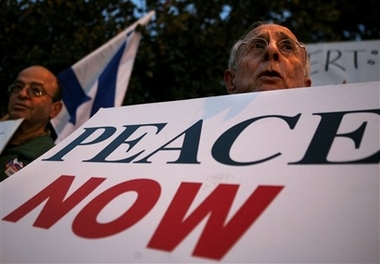
Gaza Peace Vigil

The day before I left Denver for Jerusalem, I attended a Peace Vigil regarding the conflict in Gaza. It was a very touching event, and my emotions were heightened considering the fact I would be going to Israel within only a couple of days. The coordinators of the vigil were very conscious of keeping the event peaceful and focused on the value of life and an end to conflict, rather than the politics of the situation.
We met at the library, and then walked to the campus greens, stopping 7 times on the way. At each stop, the coordinator briefly talked about what had happened on day one, three, five, and so on, of the conflict, and how many lives had been lost on each day. At that point, over 700 Palestinian lives had been lost due to fighting, as well as around 50 Israeli lives.
The event had 3 speakers. Two of them were university professors, and the third was a Fulbright scholar studying at DU. He is from Gaza, and his family is still there - not allowed to leave. He spoke briefly, but his message tore at my heart. He had lost contact with his family for about 5 days, during which he did not know if they were dead or alive. When he finally re-established contact, he learned of the death of many of his friends and the loss of his home - however, his family was still safe. He spoke about his children, and about how difficult it is to explain to them that not all Israelis, Jewish people and Westerners are not evil or intent on hurting them.

His message is important- the vast majority of people affected by political conflict are just normal citizens. It is women and children. And they don't necessarily understand why someone would want to destroy their homes, their schools, their mosques and churches, and so on. Many such children are losing their families and their lives, and they are growing up in hatred of those responsible for the destruction.

Another generation is growing up full of hatred. Violence breeds more violence. It has to stop.
After the speeches, we placed flags in the lawn for each life that has been lost due to the conflict thus far. The visual effect was sobering.


Posted by Picasa

Tuesday, January 13, 2009

Made it safely!

Just a note to let everyone know I arrived safely in Jerusalem!

As we landed yesterday, I kept thinking.... so this... is what everyone is fighting about.

There is so much to take in, it is exciting and overwhelming at the same time.

The conflict is raging on in Gaza, but we feel very removed from it here. It hasn't affected life in Jerusalem.

There is security EVERYWHERE. I got through the airport security in Denver, Newark and Tel Aviv, but I couldn't get into a pharmacy yesterday to buy soap because there was something about my pants zipper that kept setting the metal detector off (exact same outfit I wore on the plane).

I live with 4 Israeli girls, two of whom eat only kosher, so I am required to keep a kosher kitchen while I am here. I don't even entirely know what that means yet, but I know I am not allowed to put yogurt on the same shelf as meat in the fridge and I'm not allowed to use their sponges to clean my dishes.

It is cold (of course no central heating), but my hot water bottle is saving my life.

No internet at my house yet. I am hoping that we beat South Africa's record (it took me 4 months to get my internet installed there), but we'll see. I am at Hebrew University right now where I will be taking courses starting in a couple of days. We are off to take a campus tour now, so I'm off.

Miss you all!

Saturday, January 10, 2009

Tragedy and Hope

In a few hours I will once again be on a flight headed over the Atlantic ocean, but this time, my destination will be Jerusalem.

There is a war going on, yes. It has certainly been on my mind and heart constantly. Many have asked me if I am still going, and the answer is yes. I am also asked continually if I am afraid - I am not afraid. If I were afraid, I would think twice about going, because I don't ever want to live in fear. I believe very much in what I am going to learn about and work for, and that is what I am focused on. I don't think I could learn the things that I am going to learn anywhere else, and the fact that the conflict is raging even at the moment proves that much is needed to be understood. I believe that what is going on in Israel and Palestine is the heart of what is going on in the entire world. I feel enormously blessed to have the chance to learn about it first hand, and even more to have the chance to begin to work for peace. Moreover, events over the last few days have put much into perspective.

***
A few days ago, the members of the Jerusalem program had a meeting to discuss last minute logistics and safety concerns.

However, instead we received devastating news. The night before, one of the members of our program, Lauren Johnson, had passed away unexpectedly in her home in Denver. She was 22. Her death was a shock to everyone.

Yesterday I attended her memorial service. Though it was heartbreaking to mourn the fact that her life was cut so tragically short, I was utterly moved by the stories of her life and passions. Her passion was human rights, and there was evidence all over that she lived out her beliefs in every aspect of her life. Many of her loved ones told us how deeply excited she was to have the chance to go to Jerusalem and to work towards achieving the right to life and dignity for every person there, and to promote non-violence.

It is in her memory and to her legacy that I think all of us will dedicate our time and work there, and pray that in some way, that knowledge can be a comfort to her family and friends.

Her untimely death is also a reminder that we never know how much time we have. To me, it is a poignant reminder that each moment I have is a gift and each movement I take should be conscious and deliberate.

It is with this on my heart that I prepare to leave in a few hours for a country at war, yes - but also a place where the potential for change and reconciliation could literally change the entire world.

Friday, January 9, 2009

Denver

After leaving Houston, I had to return to Denver for about 5 days for meetings and such to prepare for my Jerusalem program. Last time I was in town I stayed with my friends John and Meredith (how do I get so lucky to have so many amazing people in my life who willingly take my homeless self in?!) While in town this time around I invaded the home of my best friend Catherine and her husband Peter. They have been the most fabulous hosts. Just look at the little cuties:

Maybe their married-ness inspired me, because a couple of nights ago I had a bout of domesticism kick in. This, my friends, is a ridiculously rare sight, so soak in the photos while you can. I decided I needed to cook a roast, of all things, and it turned out gloriously. Behold:
I was super proud. Don't you want a closer look?!

Cat and Peter helped too.

I also decided I needed to bake bread. What I didn't take into consideration is that the bread would have to rise. twice. and then still be baked. so the bread got finished at 11pm, a mere 3 hours after we had dinner. I never claimed to have a talent at this.
Posted by Picasa